
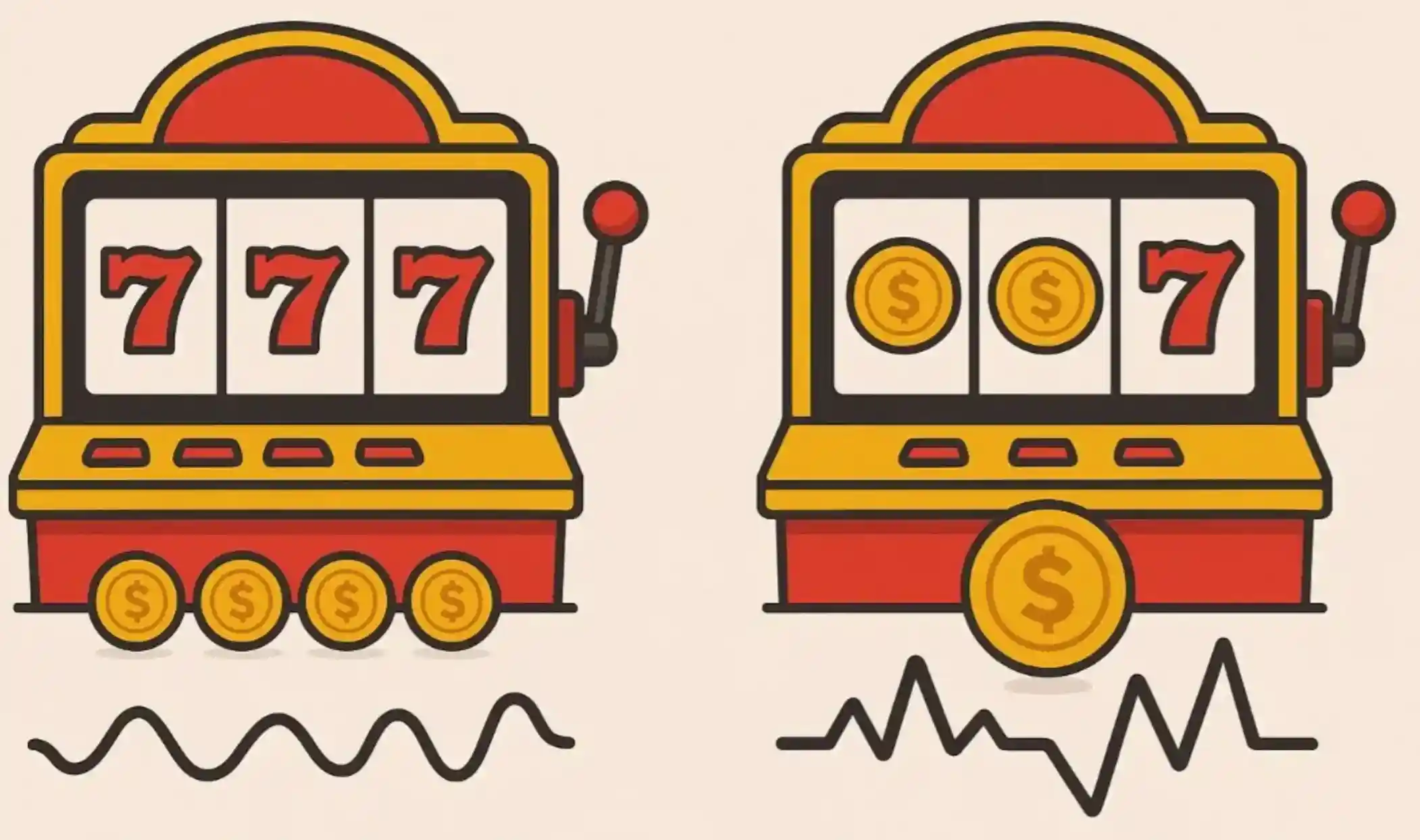
What you’re really feeling is the effect of volatility. It doesn’t predict wins. It simply describes the rhythm of the game: whether events happen often but quietly, or rarely but with a bang. Understanding this in advance saves you from frustration and unrealistic expectations.
Choosing Your Style: High or Low?
In simple terms, volatility answers two questions: how often something happens, and how big it can be. A good way to think about it is income style — steady or risky.
Low Volatility — The “Salary” Mode
Here, events appear more frequently, but they’re modest. Small wins, minor bonuses, a feeling that the session is “alive”. Many people prefer this style because it doesn’t require patience or nerves of steel.
Your balance usually decreases more slowly, emotions stay under control, but the chance of a dramatic outcome is lower. It’s steady, predictable, and calm.
High Volatility — The “Risky Side Hustle”
This mode can feel silent for a long time. Dozens of spins without anything notable are completely normal here, which is why many players think the game is “dead”.
But when something finally happens, it can outweigh that long wait. This format suits those who are patient, prepared for dry stretches, and understand that boredom is part of the deal.
Why ‘Bad Luck’ Is Often Just a Misunderstanding
The hardest part of high volatility isn’t financial — it’s psychological.
When nothing happens for a while, the brain starts inventing explanations: “it should pay by now”, “something’s wrong”, “this game is broken”. In reality, it’s behaving exactly as promised.
Low volatility has its own illusion. Frequent small hits create the feeling that a big moment is “coming soon”, tempting players to raise bets or extend sessions. But regular activity doesn’t guarantee a large outcome.
Three Simple Thoughts for Players in Comilla
- Check the Volatility Before You Start.
It’s usually marked clearly: Low, Medium, or High. One glance is enough to align expectations with reality.
- High Volatility Needs Breathing Room.
If your budget is tight, this mode will feel brutal. Lower bets give you time — and time is essential here.
- Don’t Search for Meaning in Short Sessions.
Volatility is a long-term characteristic, not a promise that “it’s about to hit”. Short-term patterns are just noise.